


Teen Budgeting Basics for that First Job: A Parent’s Guide

Key Takeaways
-
-
-
-
-
-
-
-
-
- Your teen’s first job (and paycheck) is a great time to form good financial habits.
- Choose a checking account designed as a first account, with digital access.
- Setting a budget helps build responsibility from the start.
- Your teen’s first job (and paycheck) is a great time to form good financial habits.
-
-
-
-
-
-
-
Your teenager’s first steady job, after a few years of occasional babysitting and lawn mowing, is an exciting milestone. It’s time to encourage teen budgeting and financial responsibility to build lifelong habits.
Start with a Checking Account
Most employers pay via direct deposit, so if your teen doesn’t have a bank account, now is the time to open one. Start with an account like Lake City Bank’s StartSmart, specially designed as a first bank account for individuals aged 14 to 23.
StartSmart features include:
- $25 minimum deposit to open
- Access to Lake City Bank Digital to manage money 24/7
- Lake City Bank Visa® Debit Card with daily transaction limits to help build financial responsibility
- No monthly maintenance fee
- No Overdraft or NSF fees until the primary account owner reaches their 24th birthday1
Prepare your teen for their first paycheck
While your teen looks forward to that first paycheck, prepare them for the withholding they’ll see, including:
- Federal income tax
- State and local taxes
- Social Security and Medicare (FICA)
Knowing their take-home pay makes it easier to budget and set savings goals.
Budgeting for teens
Showing your teen how to budget effectively, including setting savings goals, helps form habits that lead to financial independence. Start by explaining that budgeting isn’t a bad thing that takes the fun out of spending. Budgeting can actually make some fun short-term spending possible while saving for longer-term goals.
An easy way to start is by using percentages. Most young adults with their first job live at home, where parents cover their living expenses, so allocations look a little different than a typical household budget.
The breakdown below is a good starting point.
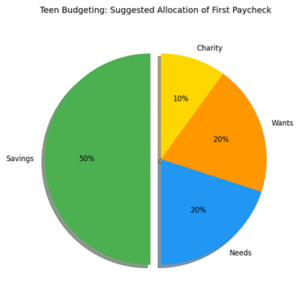
- 50% for savings toward long-term goals like college or a big purchase
- 20% for needs, such as clothing and essentials
- 20% for wants, like hobbies or entertainment
- 10% for charity
Consider opening a savings account to store money set aside for long-term savings goals.
Managing Money Digitally
Make sure your teen’s bank account has features to make it easy to manage and spend, especially digitally. Keeping track of balances and spending in real time can help make sticking to a budget easier.
Lake City Bank Digital has tools that make it easy to manage money right from your phone, including:
- Goals² — allows you to save automatically for a big purchase, a trip, or just about anything.
- FamZoo3 — helps your whole family build healthy financial habits.
- SpendSave — automatically rounds up debit card transactions to a savings account or a verified charity.4
- Financial Tools — help you track spending, create a budget, and manage your money more effectively.
In addition, use Digital to manage day-to-day banking by viewing accounts, paying bills, transferring money, and depositing checks. You can also set alerts to stay current on account activity and detect possible fraud.
Don’t forget the Debit Card
Spending with a card—in person or online—has become the norm for most of us. Using a debit card responsibly is an important skill to develop early.
With a digital banking app, you can help your teen:
- Monitor card activity in real time
- Set alerts to notify you of activity
- Check balances before making purchases
Combining a checking account with budgeting and digital tools creates a strong foundation for financial independence and sets the stage for healthy money habits.
Your teen’s first paycheck is more than just money—it’s a first step toward financial responsibility. Teaching them how to budget, manage a checking account, and save for goals equips them with skills they’ll use for life.
1See the Personal Account Terms and Conditions, Personal Administrative Charges disclosure, StartSmart Administrative Charges disclosure, and StartSmart Product Disclosure for details, or call our One Call Center at (888) 522-2265.
2Goals, as referred to herein, constitute the Goals Account described in Section E Investment Accounts of the Personal Account Terms and Conditions.
3Additional fees may apply.
4Fees apply for SpendSave for Impact donations. Refer to Lake City Bank’s SpendSave Product Disclosure for more information.
-
