Key Takeaways
- Buying and renting both come with financial and lifestyle trade-offs.
- Homeownership can build equity and offer stability, but it also requires upfront costs and ongoing maintenance.
- Understanding your budget and the current housing market can help you make a confident decision.
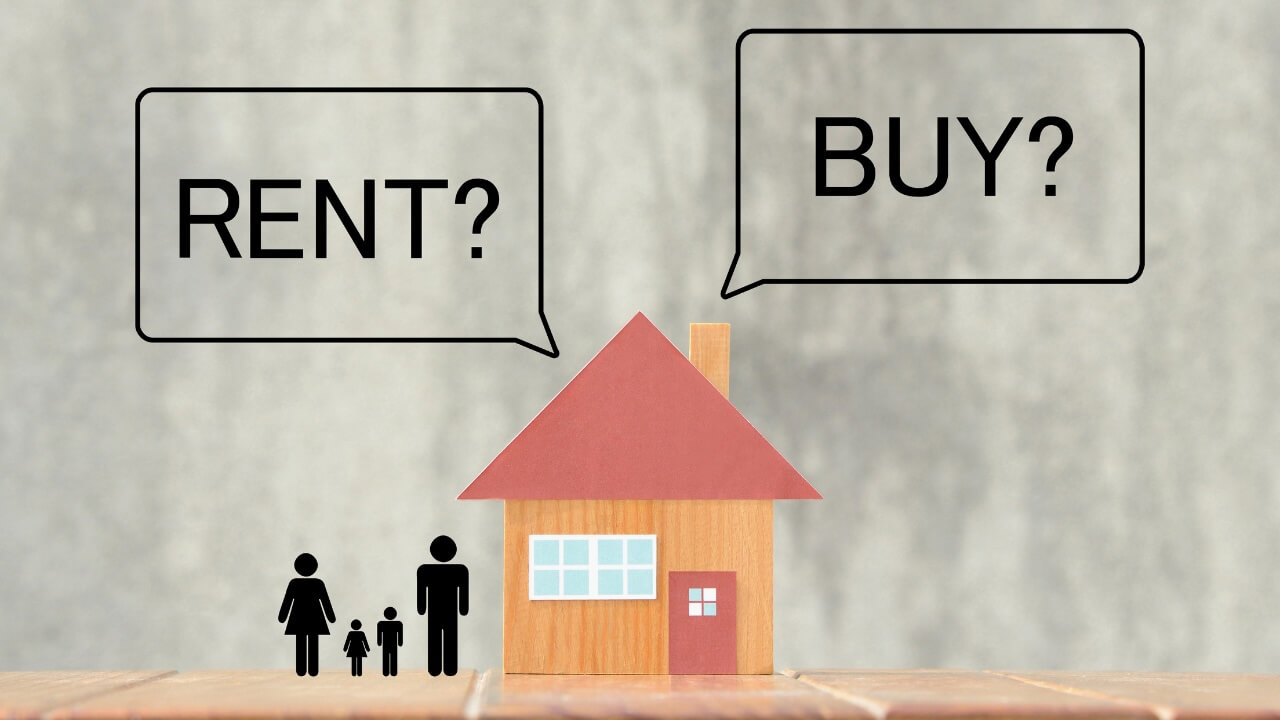
Considering moving to your first house? The pros and cons of renting vs buying a home are worth considering before you pack your moving boxes.
Pros of Buying a Home
The housing market today is quite different from what it was even four years ago. Both mortgage rates and home prices are rising, making saving for a down payment more difficult. Still, depending on your situation and goals, buying a home may be the best choice for you.
Read on for 3 benefits of buying a home vs renting.
1. Building Equity
Equity, the difference between your home’s value and what you still owe on your mortgage, is probably the biggest benefit to owning real estate. As a very general rule, homes increase in value over time, so you build equity over time in two ways:
- As you pay down your mortgage principal with each monthly payment
- If your home’s market value increases
2. Freedom of Choice and Time
The pool of single-family homes for rent that suit your needs is much smaller than houses for sale, so you have more choices if you’re buying.
When you buy a home, you have the freedom to choose details that matter most to you, including:
- Neighborhood
- Home style and size
- Condition — move-in ready or fixer-upper
- Amenities
In today’s market, you’ll likely have more time to choose a home as well because houses are remaining on the market slightly longer than in the recent past. In addition, many listings show price cuts before they sell.
3. Payment Stability
Although mortgage interest rates and home prices are on the high side compared to a few years ago, once you’ve taken the plunge and purchased, your payment on a fixed-rate mortgage will remain stable, while increases in your monthly rent are out of your control.
However, mortgage interest rates can also fall, leaving you with a higher-than-market payment — at which point you may consider refinancing, though it’s important to keep in mind that refinancing typically comes with upfront costs.
Pros of Renting a Home
Buying isn’t the right fit for everyone. Renting offers flexibility and lower upfront costs that may better align with your current stage of life.
Here are several advantages to consider.
1. Lower Costs
In many markets, monthly rent for a similar home may be lower than a mortgage payment. Keep in mind that home ownership costs include insurance, property taxes and repairs in addition to the monthly payment.
Buying also requires upfront expenses such as a down payment and closing costs. Renting typically involves a security deposit and first month’s rent, which is significantly less than the cash needed to purchase a home.
Those savings can be directed toward building an emergency fund, paying down debt or investing.
2. Greater Mobility
Renting makes it easier to relocate. When your lease ends, you can move without listing your home, finding a buyer or navigating the sales process.
This flexibility can be valuable if your job, family situation or long-term plans may change.
The trade-off is less freedom to customize your space, as landlords often limit renovations or major updates.
3. Fewer Maintenance Costs
When you rent, the landlord is typically responsible for repairs and property maintenance. That can provide peace of mind, especially when unexpected issues arise.
Homeowners are responsible for repairs, and costs can be unpredictable, from appliance replacements to roof repairs.
4. No Worries About Home Value
As a renter, you don’t need to worry about changes in home values. While real estate often appreciates over time, prices can decline in certain markets or economic conditions.
If a homeowner needs to sell when property values are down, they could risk selling for less than they owe on their mortgage, sometimes referred to as being “upside down” on the loan.
Think Carefully Before You Decide
Weighing the benefits of buying a home vs renting can be complicated. Take time to review your budget, savings, job stability and long-term goals.
By weighing the benefits and trade-offs of each option, you can move forward with confidence and choose the path that works best for you. When you’re ready to take the next step, a Lake City Bank mortgage expert can help you navigate your options and move forward with confidence.
All loans are subject to credit approval.